
Guide
Best Resin for Miniatures and Props in 2026
Resin choice changes how a print survives the next two years far more than it changes how it looks coming off the plate.
These are the bottles I keep going back to for miniatures, display pieces and props that get handled — and, just as importantly, how to run them without hurting yourself.
Detail Comes From the Printer, Not the Bottle
This is the thing beginners most often have backwards. In-plane detail is set by the pixel pitch of your printer’s LCD and by your exposure time; almost any well-dialled resin on a modern 8K or 12K screen resolves finer than you can see unaided.
What the resin actually decides is how the part behaves afterwards — how brittle it is, how it sands and takes paint, how much it shrinks, and how forgiving it is of an exposure that is slightly off. Pick resin by the job the part has to do, not by the photos on the label.
Standard, ABS-Like and Tough
Standard resin is cheapest, easiest to dial in, and the right default for display miniatures, busts and anything that lives on a shelf. It is also genuinely brittle — thin swords, antennae and fingers snap.
ABS-like resin trades a little crispness for roughly 25% elongation at break, so parts bend a long way before they fail. Tough resin goes further again, around 35% elongation, and is what I use for prop parts that get gripped, dropped or worn. Mixing a tough resin into a standard one is a common way to land in between, but measure by weight and re-run an exposure test afterwards.
Exposure and Temperature Do More Than the Label
Photopolymers are temperature sensitive. Aim for 24–30 °C in the room. Below roughly 20 °C viscosity climbs, resin stops levelling back between layers, and prints start tearing off supports or failing on the plate outright. If you are stuck between 18 and 24 °C, expect to add around 20% to your exposure time.
Run a validation matrix print whenever you open an unfamiliar resin or move a bottle to a different printer — an exposure that is correct on one screen is usually wrong on another, and over-exposure is the normal cause of lost detail and holes that print closed.
Curing: More Is Not Better
Under-curing leaves a tacky surface that is still chemically active and still capable of sensitising your skin. Over-curing is the specific mistake people make with tough and ABS-like resins: push the cure too far and you drive the elongation back down, which turns the expensive tough resin you bought into an ordinary brittle one.
Wash in isopropyl alcohol, dry the part completely, then cure in short passes and stop as soon as the surface is dry to the touch and no longer wet-looking.
Safety Is Part of the Process
Uncured resin is a skin sensitiser: repeated contact can produce an allergy that does not go away, and once you have it your resin printing is over. Wear nitrile gloves for every handling step, add safety glasses, and treat ventilation as the primary control — a half-face respirator with organic-vapour/P100 cartridges backs ventilation up, it does not replace it.
Never pour resin or contaminated alcohol down a drain. Cure your waste instead: leave failed prints, dirty paper towels, used gloves and settled wash solution under UV or in sunlight until fully hard, then dispose of them as solid waste.
Recommended Gear
Our Picks

Pros
- Easy to dial in and forgiving on exposure
- Low odour compared with older standard resins
- Cheap enough to spend on test prints while you learn
- Translucent red takes internal lighting and tinted finishes well
Cons
- Brittle — thin unsupported details snap if the piece is dropped
- Needs a warm room; quality falls away below about 20 °C

Pros
- Opaque grey shows surface detail far better than a clear resin under a lamp
- Photographs and primes cleanly with no colour bleed through paint
- Same easy, forgiving standard-resin handling
Cons
- Same brittleness as any standard resin
- Pigment settles in the bottle — shake it properly before every pour
Pros
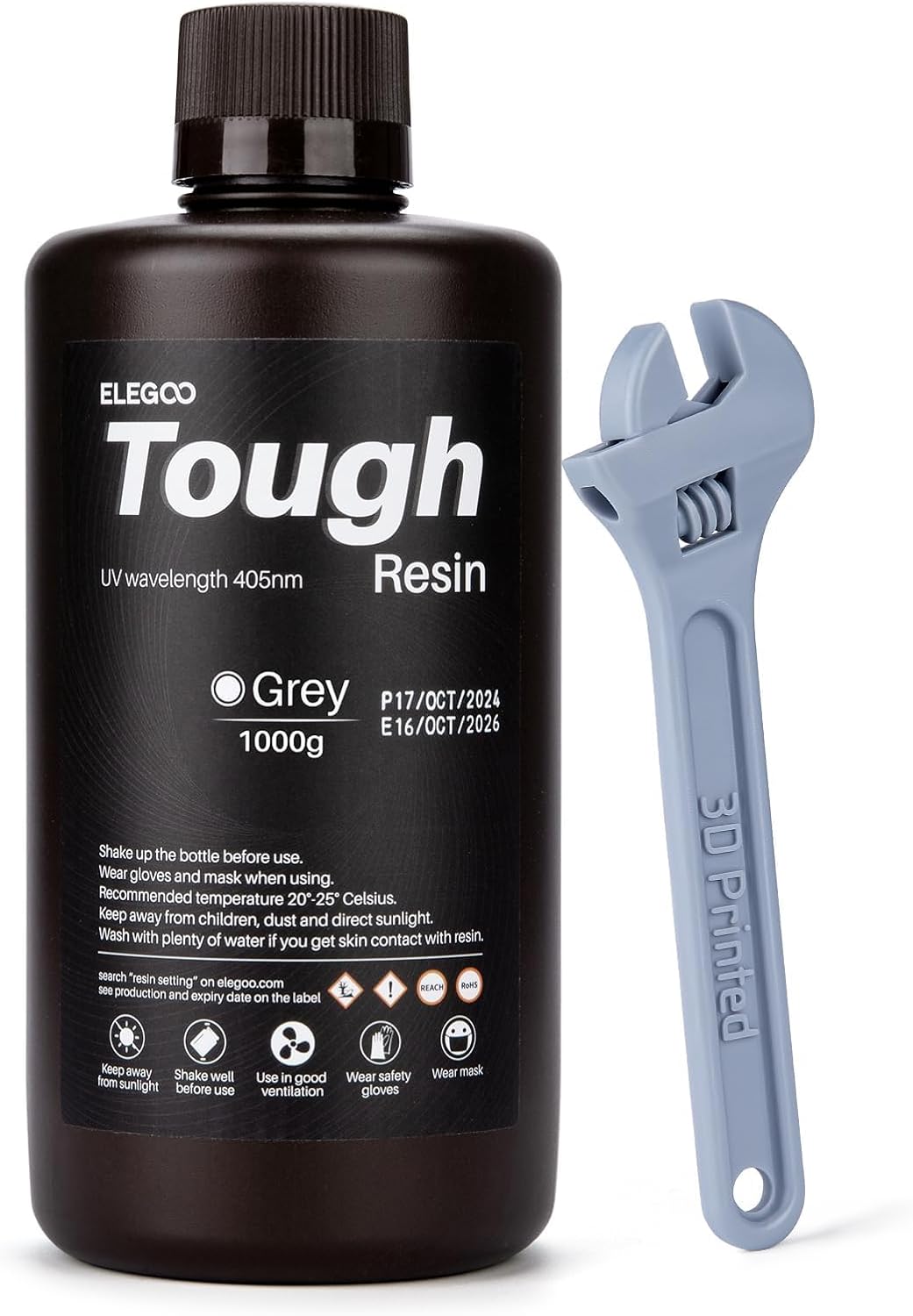
- Around 35% elongation at break — parts flex instead of shattering
- Survives handling, transport and being worn on a costume
- Sold in 1 kg and 2 kg bottles, so the cost per litre drops if you commit
Cons
- Noticeably more expensive per litre than standard resin
- Over-curing destroys the toughness you paid for — keep cure passes short
- Thicker and fussier about temperature; give it a fresh exposure test
Pros
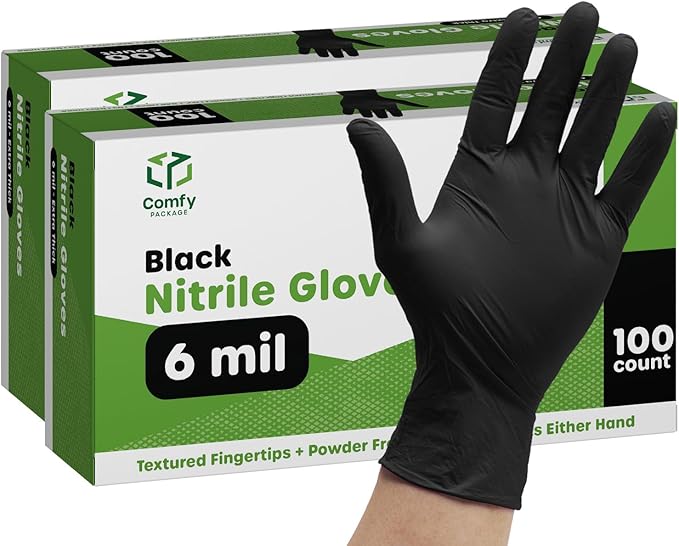
- 6 mil nitrile stands up to resin and isopropyl alcohol without tearing
- Cheap enough in bulk that you change them instead of stretching a pair
- Black colour makes resin splashes immediately obvious
Cons
- Single use — resin-contaminated gloves need UV curing before they go in the bin
- Nitrile specifically: latex is not an acceptable substitute for resin work

Pros
- Takes bayonet organic-vapour/P100 cartridges — the correct pairing for resin and spray paint
- Silicone facepiece is comfortable enough that you actually keep it on
- Cartridges are replaceable, so the mask itself lasts years
Cons
- Only works with a clean seal — facial hair on the sealing surface defeats it
- Cartridges have a limited service life and must be changed on a schedule
- Backs up ventilation; it is not a licence to print in a sealed room